The problem
Most writing software wants the structure before the first sentence
Programs like Scrivener are built around binders, folders and outlines. That suits writers who plan. Many people just want to start, and then carry the structure and the continuity in their heads: who has which eye colour, which street leads where, what was promised in chapter two.
The app is for them. It takes structure and continuity off the writer’s mind, and holds back everything that does not help them start.
The idea
Everything comes from the typewriter
The prototype
Type on A4, review as a book
View 1 of 4
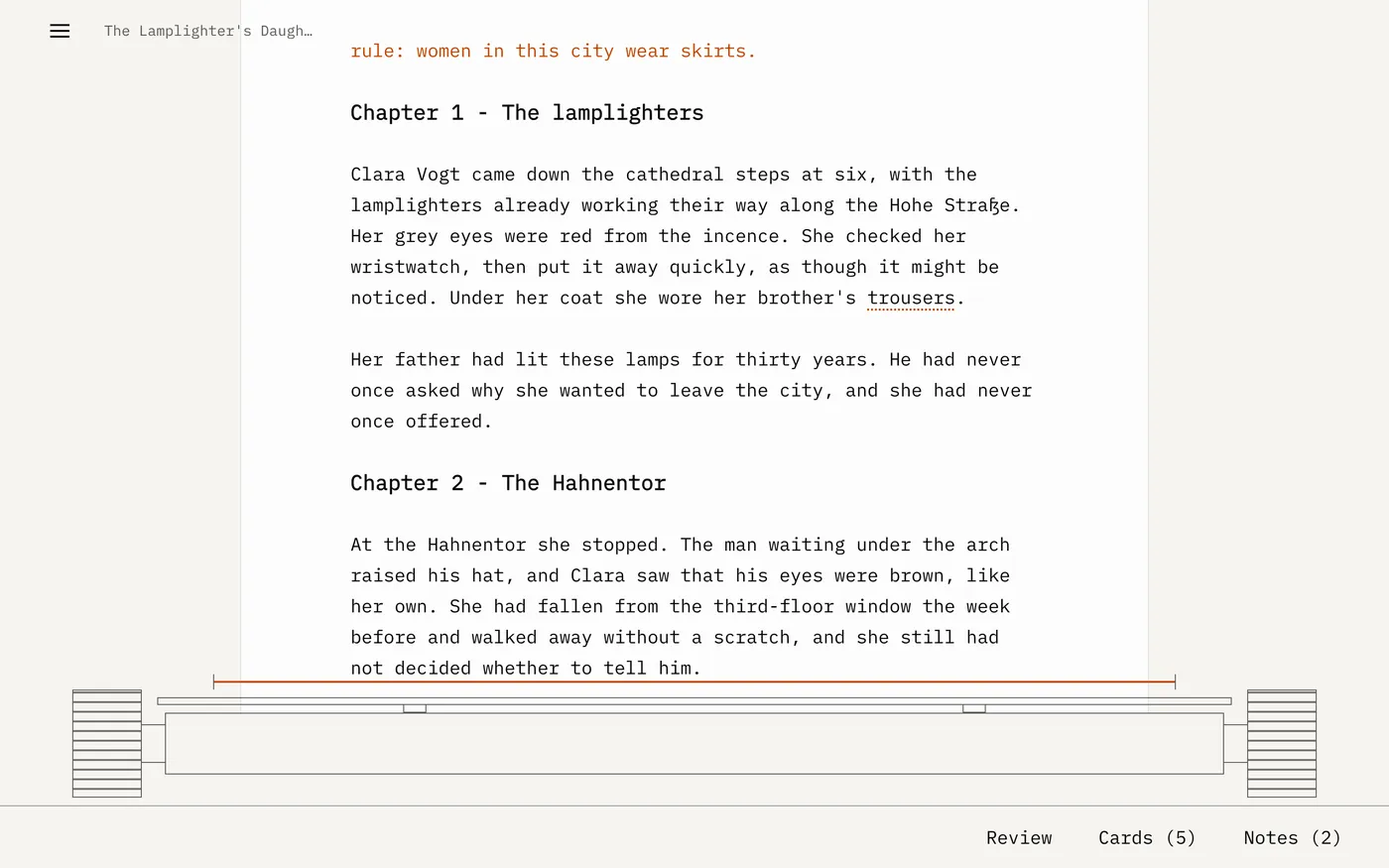
The typewriter
A sheet of paper and a carriage. The writer picks the typeface: IBM Plex Mono, Courier Prime, Special Elite or Satoshi.
View 2 of 4
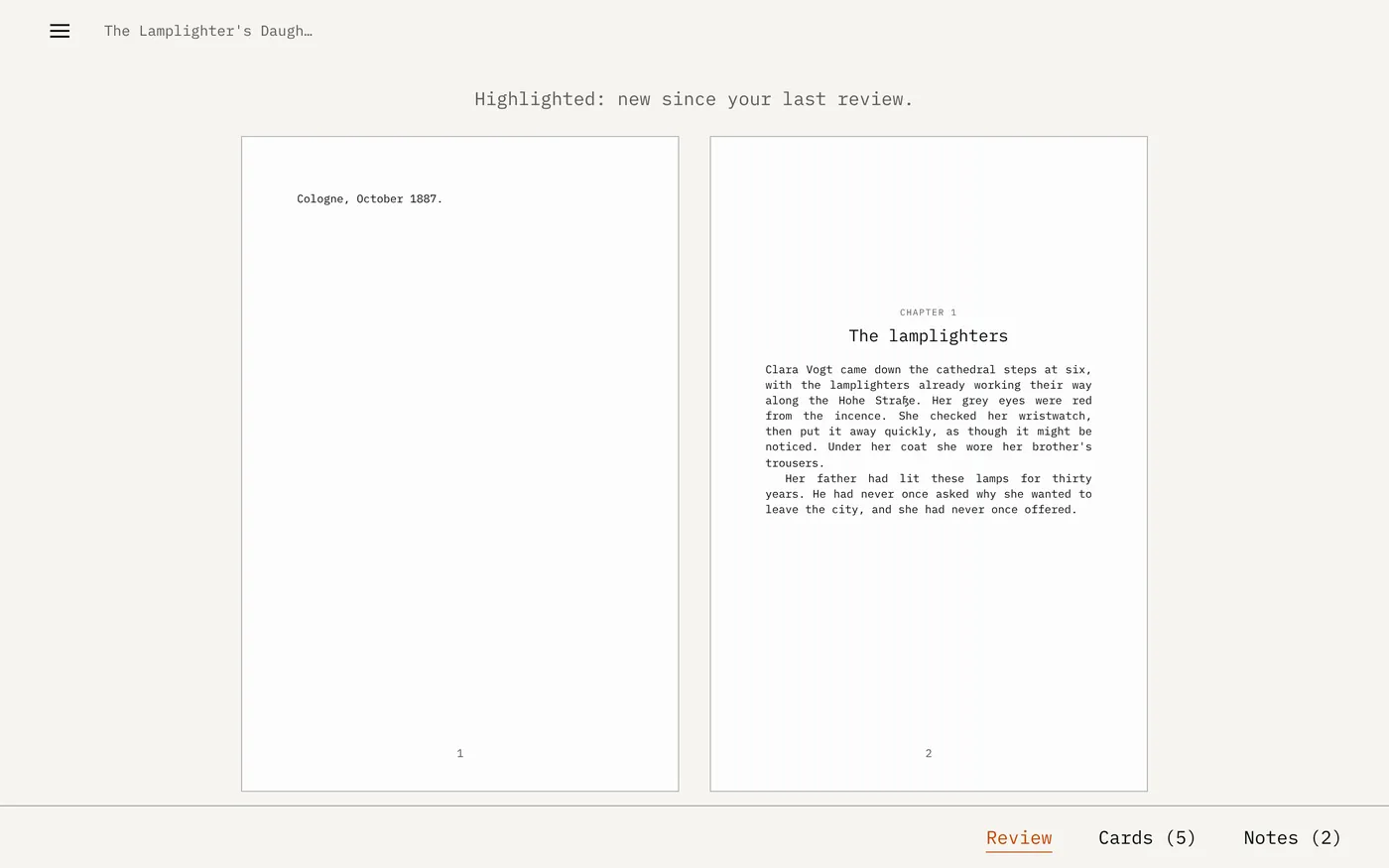
Review as a book
The same text set as hardback or paperback pages. Anything new since the last review is highlighted.
View 3 of 4
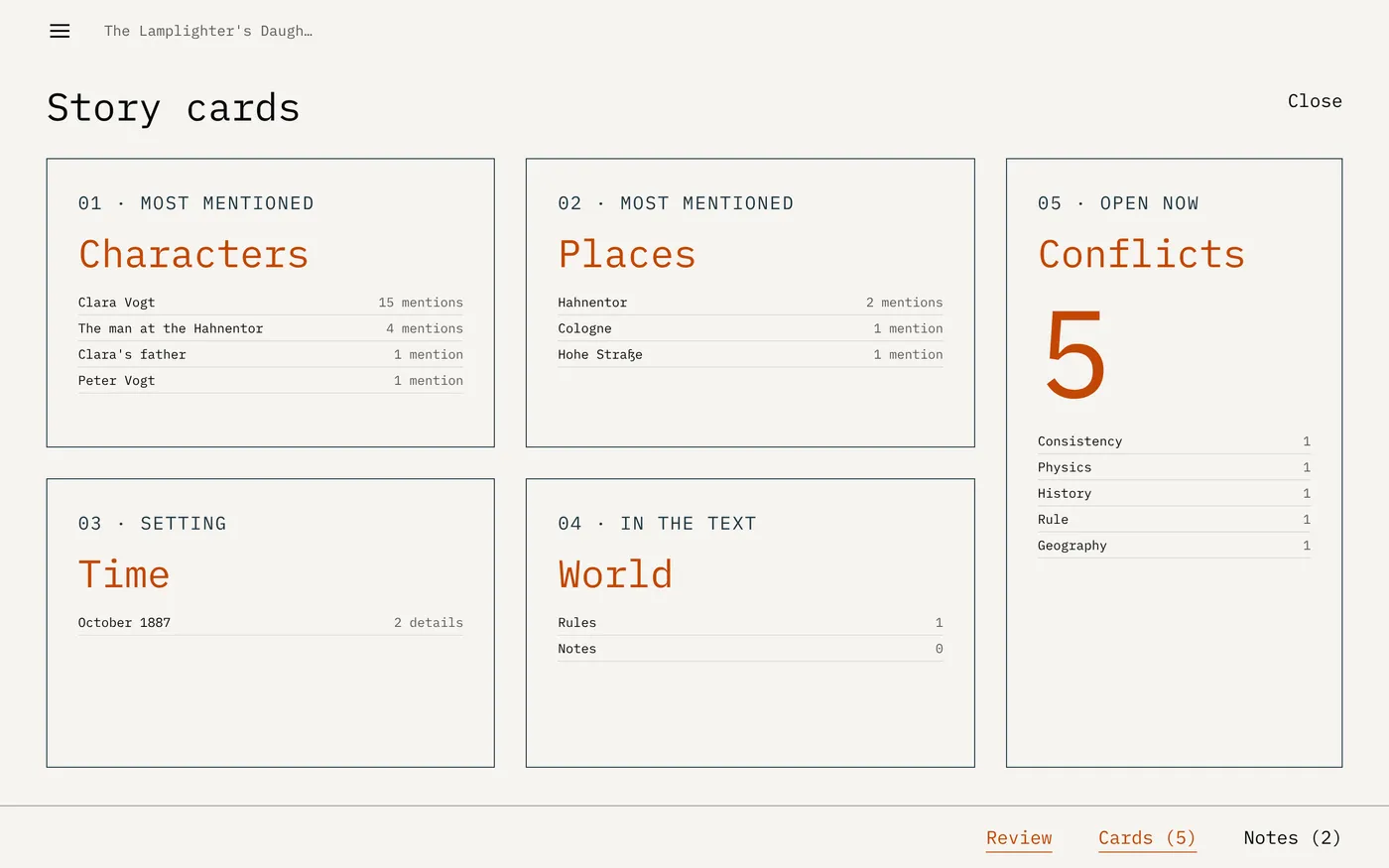
Story cards
Characters, places, time and world rules, counted from the manuscript. Nothing to fill in.
View 4 of 4
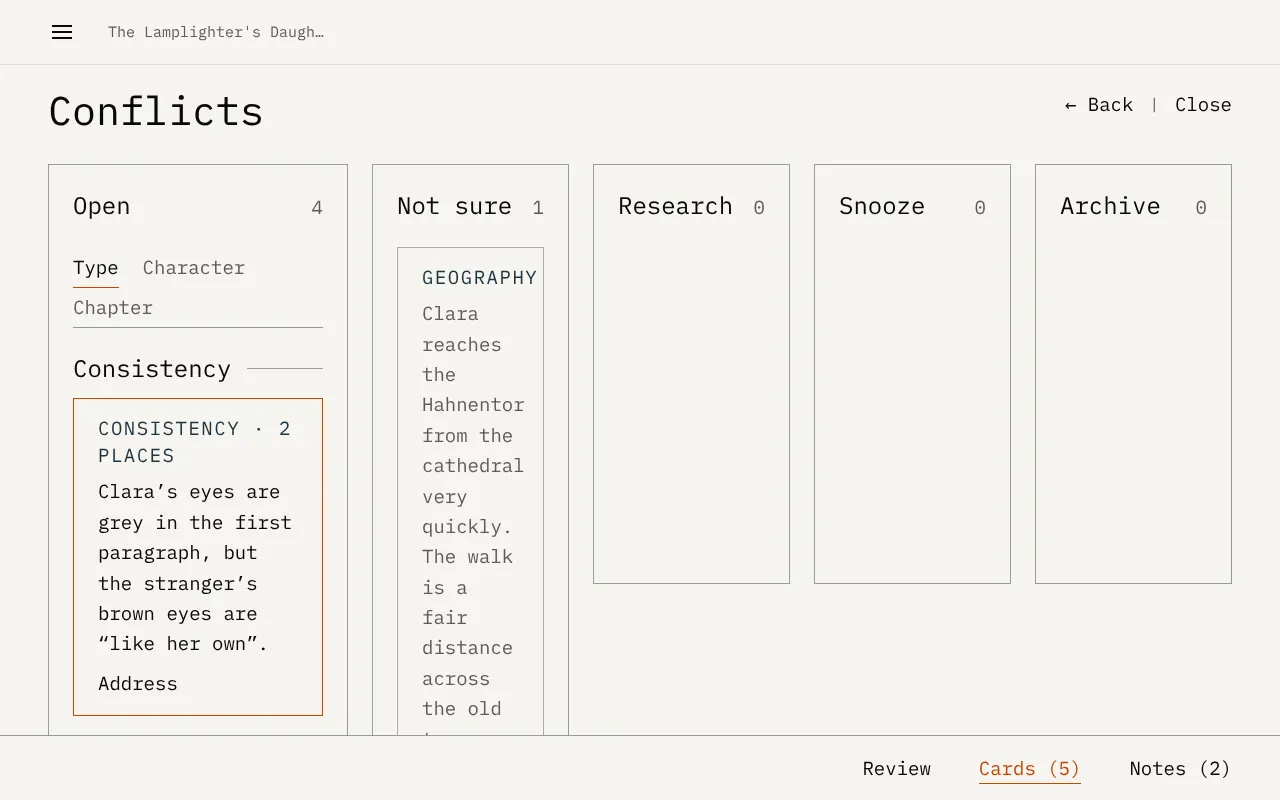
Conflicts
Claude reads the whole book, so drift between early and late chapters shows up: grey eyes in chapter one, brown in chapter two. Each conflict can be addressed, researched, snoozed or archived.
The rules
One test for every feature
Every feature must help the writer start, or take structure and continuity stress off their mind. If it does neither, it waits.
What’s next
One genre first
Pacing checks cover romance only for now, against a published beat sheet. Other genres may follow as modules. Notes can be left for the writer or handed to Claude to research. The next step is a coded version for real manuscripts.